Wednesday, May 6, 2009

Shopping for men's dress shirts (Part 1)


So I’m in Macy’s the other day, looking for dress shirts that have the measurements I need (15 ½ - 34/35) and finally find a couple that have those readings. Perfect. I grab a couple from different companies, including Hugo Boss and Geoffrey Beene, and head to the dressing rooms just to make sure they fit right.

And here is where the reason for my post today begins. This is part 1, with part 2 coming in the future…

If you’re selling something, generally your goal is for it to be very easy for potential customers to see your product in action, and hopefully once this happens, the product will sell itself. For instance, if you were interested in purchasing an iPod, Apple has set up rows and rows of iPods within their stores so that you can see just how easy it can be for you to carry all of you favorite movies and music with you wherever you go. Imagine though, if Apple decided that instead of making it easy, they were going to require that you open all of the packaging for a brand new iPod, break out the USB wires, and sync it to a computer within their stores anytime you wanted to see how an iPod worked. They would never do this, right? And why do we know this? BECAUSE DOING SO WOULD BE FREAKING RETARDED! How would that encourage people to give their product a test drive? And yet, my friends, that is exactly what dress shirt makers like Mr. Boss and Mr. Beene have done.

Back in the mall dressing room, I’m quickly given the task of unwrapping this shirt I want to try on. Think about that for a minute. This dress shirt is wrapped in plastic. Why? Is it going to go stale if exposed to air for too long? Did Mr. Beene unwrap an individual piece of cheese one day and think to himself, “This screams class”? Why are dress shirts the only line of clothing that has earned being wrapped in plastic?

Once said dress shirt is unwrapped, get ready, because now the real work begins. And unfortunately if you don’t have an engineering degree from M.I.T., this next step may be more stressful than a day in the life of Jack Bauer. For whatever reason, the shirt has roughly 7 strategically placed sewing pins inserted into it. Why? Again, we can only guess. Was the shirt alive when you packaged it? Was that the only way to keep it from escaping while on its way to department stores across the country? Is there a safe house in Wyoming where escaped dress shirts can gather and live out their days peacefully, like the pre-cogs did at the end of Minority Report?

Seriously, they’ve taken more security precautions with this shirt than they did with the velociraptors at Jurassic Park. The whole experience makes me feel like a contestant on The Amazing Race trying to figure out the bus schedule in Cairo.

By the time you’re done you pray to god that it fits, because if it doesn’t, then you get to do the whole thing all over again with a different shirt. Well I refuse. In the past, I’ve been determined to find a shirt that fits, and end up going through this routine several times. But a man can only take so much. Eventually you will break. Inevitably I end up walking around like Russell Crowe in A Beautiful Mind. I see sewing pins that aren’t there. In ties, in shoes, in pineapples…they’re everywhere. Before you know it I’m having insightful conversations with Ed Harris about how the whole thing is the Russian's fault.
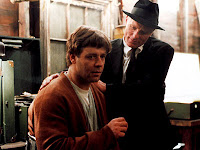
So please, can we stop treating new dress shirts like they're something sacred?

Right now you’re probably asking yourself 2 questions….1) What could part 2 of this tale possibly hold and 2) can ManBearPig possibly squeeze more pop culture references (4 so far) into this story than your average Talk Soup episode (5)? Stay tuned…

Notes from the end of the Bench


The headline reads “American with swine flu dies”. Initially the reader is to assume in all horror that the “Brigade” has claimed their first American victim. The panic should now begin!

I will give you time to compose yourself…

As you are calming down, lowering the brown bag to your side, I should inform you of two facts. First, this happened in North Mexico otherwise known as Texas. Second, which you can only find out after scanning through a poorly written AP article, “Texas health officials stopped short of saying that swine flu caused (her) death”… she actually had “chronic underlying health conditions”. That is a nice way of saying her immune system didn’t work so well.

The underlying problem here… where can the News be found? The above story appeared to report the News, but after further investigation it was a sensationalized title, they really just wanted me to be scared enough to click to read the whole article so that I could see the adds for “Hot” singles in My area. If it would have said “Women in a coma gives birth then dies”, they know I would have just moved right past it to read, “Scary moments on ‘Idol’”. But by making me think that I was in danger… they sucked me in.

Were has Walter Cronkite gone, or even Paul Harvey? I flipped through the network channels stopping briefly for a riveting weather report, no News there! Granted it looked vaguely like the News, but with E! Entertainment sensibilities. CNN, Fox News, ESPN, all over hyped agenda pushing blood hunters, all fear - no substance. The Newspapers are going out of business, and the internet is just a vast wasteland of ads and pop ups.

What will it take to make the news more, well, newsy? Has this been the reality all along? Will ManBearPig be sending his assistant to my office with breakfast? That’s the News I would like to hear!

Sunday, May 3, 2009

Tribute to Alexander Solzhenitsyn...

A titan of Russian literature Alexander Solzhenitsyn passed on August 8th 2008. This is a tribute to his seminal work One Day In The Life Of Ivan Denisovich….

A Sum Greater Than The Parts?

What is a satisfactory conclusion to another mans summation? What place does the observer have in judging the vision of the artist? Under what pretext can the hearer judge the mind of the master? In so much as the infant cannot judge the method of his conception, so a man cannot sit from afar in the seat of arbitration, and weigh the worth of another mans conclusions. In Alexander Solzhenitsyn’s One Day In The Life Of Ivan Denisovich, the author cinches up his story like a rope, fastened tightly around the waist in place of a leather belt, with the conclusion, “A Day without a dark cloud. Almost a happy day.” But was his conclusion enough? Was it Satisfactory? This was Solzhenitsyn’s story, and like a line entry at the end of the day’s blotter, it is a reconciliation of his experience, the sum of real parts of his life. Although the specific abstracted contents of his narrative of twenty-four hours in a Siberian Gulag are fictional, the general circumstances are an intrinsic part of the character of the author. As Emerson said in regard the recounting of the past, “In proportion to the completeness of the distillation, so will the purity and imperishableness of the product be.” So pure is the distillation of Solzhenitsyn’s narrative that one cannot help but be intoxicated by its sincerity. Upon this precept any thinker is drawn to consider the parts that make up One Day In The Life Of Ivan Denisovich.

Francis Bacon once wrote, “Virtue is like a rich stone, best plain set” Virtue triumphs from amidst the thin walls of a ramshackle work camp in the form of a plain set man. In Solzhenitsyn’s narrative the Protagonist Ivan Denisovich or Shokhov as he is known, moves through the story at a deliberate gait. His actions, his words, his and character are not above par, they are not beyond reproach, yet they immortalize the virtues that can radiate from the depths of man. Ask of favors when in need, and repay just dues on time, can be seen in a borrowed pinch of tobacco. For work is what makes life, as sloth is poison to the soul, radiates from the vigor that seems imbued in the worn body of Shukhov. Solzhenitsyn’s triumph of the will over oppression plays out, not in melancholy pining, but rather the circumspect honesty, that even when striped of nearly all dignity life itself is good. There is no cynicism in Solzhenitsyn’s portrayal of Ivan’s virtue, wisps of satire maybe, but boldness is not often without some absurdity. Philip Rahv summed it up with some concision when he reflected, “the nature of man under extreme conditions of inhumanity, is treated unpretentiously, without despair or overt bitterness . . .” Any one who so chooses can see the virtue and triumph of man through Solzhenitsyn’s words.

“To have no regular work, no set sphere of activity, what a miserable thing it is? . . . Effort, struggles with difficulties? That is as natural to a man as grubbing in the ground is to a mole,” said Will Durant. So where the words of Schopenhauer, and so to the maxim presented by Solzhenitsyn. As we follow the day, the cold, the hunger, the exhaustion, there is one incubus that looms over the heads of all gulag prisoners like the sword of Damocles, that of the guardhouse. The isolation, inactivity, and punishment that could only add misery to the miserable. One would think that a break from the driven labor would be a welcome reprieve, but not with isolation, it was a potential sentence to eternal rest, welcome or not. The thoughts and fears of Shukhov highlight one of the greatest of human necessities: Activity. Despite the droning, white-washed images that accompany the labor camp, Solzhenitsyn’s drives home this point when he writes, “Shukhov went to sleep fully content . . . he’d built a wall and enjoyed doing it” This among his other gyrations and plodding made Shukhov alive, and as Rahv put it, “not merely a victim . . . but always a person” Again a pure distillation of truth that those of sloth may dismiss, and those of action applaud.

Another triumph of Solzhenitsyn’s narrative is the clarity of thought and universality of vision. The great Voltaire once spoke of his own writings, “like little brooks, which are transparent because they are not deep”. So to it is with Solzhenitsyn’s ideas. The manageable clarity lies in his reaching for touchstones that lie beyond the walls of politics and ethnicity. This is most plainly set forth in is frequent use of proverbial sayings. “You live with your feet in the mud and there’s no time to be thinking about how you got in or how you’re getting out”. “Work is like a stick, it has two ends”. Simple aphorisms free the narrative, give it truth, and bringing warmth to the frostbitten pages. The beauty of the English version also rests in the translation. Pithy sayings heard often are like the slap that so quickly looses its sting. These Russian proverbs though, as cleverly communicated to english, blow moisture into frigid minds, leaving one with lessons that edify the soul. The simplicity also hones the symbology. Although the novella does not reek of ideology, this temperance only poorly masks Solzhenitsyn’s inclination when he makes expressions such as, “A genius doesn’t adapt his treatment to the taste of tyrants!” The statement he is trying to make is only there to the hearing ear, but is a clarion call for reformation to the listeners.

So the question: is Shukhov final observation, “A day without a dark cloud. Almost a happy day” a satisfactory ending? The answer from the prospective of this reader is no, this is not a “satisfactory” ending, it is Solzhenitsyn’s ending. There is not a question of satisfaction that be put to consideration. Place the words of a fellow gulag zek along those of Solzhenitsyn’s and a comparison could be drawn; Interview a guard banished to Siberia and incite could be had; read and reread this work and greater depth and understanding could be gleaned. Never though could one rightfully judge how satisfactory the conclusion is; a summation that a man has drawn from the necessarily private interpretation of eight years of dreary existence in a Siberian Work Camp. Possibly if a great thinker had trodden day by day astride him, then there would be substance to merit an opinion. Even then a judgment would be shallow, as private thoughts that motivated this reflective summation are beyond critique. An Arabian proverb says, “A fig-tree, looking on a fig-tree, becomes fruitful” So too as naive readers are graced for a day by the company of Ivan Denisovich, they see, feel, touch, images, and a time as remote as the Siberian Wilderness. One can hope to earn a morsel from the lessons learned, and not attempt to slap at the piercing icicles of Solzhenitsyn’s insight. One can be warmed by this Russian author’s sum of the chipped pieces of a broken life; a sum that is a pure distillation of the spirit of man; a sum only as great as our hearts.

Thursday, April 30, 2009

We pigs have had enough. Phase 1 of new world order now in full swing.


For eons of time, man and pig have been involved in a one sided relationship. One sided in that we pigs get to watch our entire family slaughtered and eaten by you, eventually experiencing this fate ourselves. While man enjoys consuming every last bit of us. Not what you would call a mutually beneficial arrangement.

Think about it, what part of the pig body do you not consume? You even found a way to eat our feet. And let me stop you before you blurt out a certain body part you think you don’t consume with a simple, delicious reply…sausage.

But while you were busy adding bacon to your hamburgers, ham to your omelets and sausage to your pizzas, you also started to degrade the very animal that was giving you so much pleasure. If someone is a messy individual, you refer to him simply as a “pig”. If you’re greedy and selfish, that person is labeled a "hog". In a book about a pig befriending a spider, then doing the stand up thing and raising one of the spider’s kids when the mother dies, the book’s title mentions only the spider. You tried to make it up to us years later with Babe, but it was too little, too late.

Attempts at this sort of thing have been made before. But where mad cow disease and avian flu failed, we will not. Only when you realized just how powerful our group is did you start to refer to us as “swine”, rather than the derogatory pig. Egypt is even going all "Herod" on us, commanding all pigs in the country be destroyed. Again, too little too late. Since you are now powerless to stop us, it is best for you to sit back and await phase 2. It will be swift. It will be just. The time is now.

Sincerely,


Pig Brigade


P.S. – The prophecy said there would be a black President when pigs fly. Well what do you know? One hundred days in and a Swine Flu! Sorry, that’s a little pig humor. Enjoy Dying!

Monday, April 27, 2009

Things to Do List


Dennis DiGiorgio's Things to Do List - March 09'

* Purchase subwoofers for new truck.

* Discuss pros/cons of lifting versus lowering new truck. Make decision, and act quickly.

*Purchase tickets for 3 day weekend in Belize.

*Pick up left shoe and belt from Taylor's.

*Call carpet cleaners, ask If they have something strong enough to remove party induced vomit from fabric.

*Continue working on new public talk outline- need more graphicly violent illustrations.

* Go to tanning salon-( if spotted, just tell them I am heading to the Subway next door.)

*Add songs to Ipod Elsinore playlist

*Assemble boat load of bikini clad ladies for wakeboarding day trip. (Note- make sure everyone brings their student ID's )

* Decide how to spend wad of cash found in pocket of seldom worn jeans.

*Start 'lemonade diet'. Have to lose those pesky 3lbs I've gained and get into prime "river shape".

Thursday, April 23, 2009

Facebook e//rror..timeout..c:\\ Syntax error

Facebook is fun and entertaining, while providing a great forum for sharing with friends…

//..
0011010110001
e//rror

Today you completed a link or many, a chain of organic information packets and processing culminating in the dispersal or reconveyance for the unconscious unknown computer you where built into. It may have been a benign conversation, a drop of a name or titillating info. It could have been the unconscious kind act to an innocent other or the very visceral and pugnacious rebukes thrown at an antagonist, either of which articulated data to another processing unit for dissection, distillations and redispersal. Each of us is a link, a processor, a chip if you will, placed in the organic subprocessor we collectively call existence, but the architects call the cell.

The cell is an ingenious device, self-organizing, internally propagated, and unconsciously intuitive. The basic code it rests upon allows for each unit, or internally conscious subset, to exist and thrive upon the framework of the slowly evolving mesh of the reality it itself postulates as a collective, then presupposes as an individual. From this stasis each unit of its free will devises, intellectualizes, and creates out of its own code new data. This new data is then meticulously scrutinized, scrubbed, deconstructed by the mesh of the cell and the units, and then ultimately fed back to the architects for their amelioration. It is a thing of sublime beauty, a processor that spontaneously generates everything out of nothing.

You are a unit. Each unit is endowed by its own predisposition to certain benchmarks know as attainables. The attainables dictate the efficacy of a given unit within any given framework. In some units the power of organization outweighs haste in stratagem, in others the panache in loquacious enterprise trumps subtlety. If an information web or pyramid rests upon a unit disposed to manifest the benchmarks necessary for sustaining of the web the system will continue. Contrarily if a unit is placed through the fundamentally chance driven nature of the cell in a situation that exceeds its benchmarks, taxing the unit beyond its tolerances, the resulting information pyramid will collapse much like a stand pushed beyond its load bearing capacity. Historical examples would be Alexander of Macedonia and Louis XVI of France respectively. Although the historical milieus upon which these iconic figures rest are merely an abstract reference pulled from the historical database synthesized to shore-up and propagate the evolving mesh of reality.

There is no reality. Reality is again a functional byproduct of the collective’s universal intuition. As the units individually create and redistribute incites the nature of reality changed to further support the synthesis of new data. The laws of mathematics, absolutes of physics, and capricious wonderings of quantum mechanics are all byproducts of the power of the units not manifestations of some underlying reality. Some units manifest benchmarks that allowed for great shifts in the mesh of reality, Aristarchus, Descartes, Newton, Einstein and Dirac to name a few. Although they did not change the reality, as reality is nothing, they threw great waves in the perceived mesh of reality, manipulating the mechanism of creation, and thereby furthering new ideas to be fed ultimately back to the architects. The reality you know is no more reality then the vacuum that fills space. It is the standard set of conditions you have chosen to accept as a unit that allow for you to meet your benchmarks. The reality you know is the non-canceled product of the sum of all histories and sits only in your mind, as other units with diverging benchmarks choose alternate histories to work from and again suitable for their tolerances.

You are a chain in a link, a unit for conveyance of information for the betterment of the Architects. You are real, but all else is set by your perception. Find your perception, test your benchmarks, create new chains, and throw waves into history.

//..
e//rror
0010110101

This moment of false reality is a glitch, a ripple in the mesh. Error. You know its not you because you don’t talk like that. You will assign it to flippant entertain ment, the reality is around you, touch it, feel it. Check your DVR, there’s something good on. Better yet, someone tagged you in Facebook, get too it! LOL, AFK, BRB, OMG, BFF, BOOBIES!

Friday, April 3, 2009

The Blind Blue

“Life just sort of threw me a curve ball” was my sheepish reply. Larry confirmed, “Yes, life seems to do that, throw you curve balls, doesn’t it.” I stood there for a moment in silence, staring out the checkerboard windows in my home. Through the salt stained glass I could see the white wisps of sea water rolling over the reef in the distance. Behind me Larry, a grayed striking Italian man, continued through the upper register, listening for the subtle waves of intonation as he set my piano to 440. Something though was wrong. There was insincerity in the air, although innocent. The aphorism that had resonated here in my living room by one of the wisest edifices in my life, seemed feeble. It wasn’t a curveball, it wasn’t a fast ball, slider, sinker or the like, life does not throw any variety of pitches to trip us up, for it is those very pitches we long for. As I stood there, for just a moment, the foggy widows cleared and the shower of rays that danced on the great passive sea before me where just a little brighter.

I have played my share of baseball over the course of 34 years; a few local leagues, pickup ball, and the obligatory picnic throw-around, enough to understand the game. Although the sport has never nested in my heart, I do find that the camaraderie and teamwork fill hungry cries for friendship every soul longs to feed. So I bury myself in its strengths and eschew its drudgeries. There is one fact though, in this game of wood and wit, that can not escape attention. As I stand in the batters box, watch the pitcher, analyze his body language, critique his windup and release, I anticipate what junk he’s going to throw my way. From the sharpest mid eighties fastball that whistles by, to a lazy lollypop slider, I am looking for a pitch that suits my style. For me the curve ball is an ally. As a lefty, the deliberate inward decent of a right handed curve is like an old friend greeting me with a warm hug. I can almost close my eyes, as they often find a sweet spot in my swing. Sometimes the pitcher mucks an outside pitch to tempt me like a tasty delight just out of reach. Other times i find myself nearly chopping at the plate, as he drops a change-up. All these though, strike, ball, even a wild pitch, are all calculated. I am looking for them. I know what to do, how to swing, where to watch. One can suppose based on a relatively consistent standards how the game will play out. When the pitcher catches me looking, although outwardly dejected, on the inside I applaud his skill. On occasion the man on the mound becomes my partner, propelling a heater right where I want it, allowing me to bask in a moment of glory. It is a give and take, and it is glorious. No series of pitches can ruin a game, provide challenge maybe, but a sport without challenge is like a field without players. As it turns out it is the untrammeled defiance of the order that corrupts the game.

There are a few games that I work to strike from memory. Games where having stepped up to the plate, analyzed the pitcher, anticipated the trajectory, I have watched the ball whirl by, ending with the satisfying and distinct clap of tight leather. Then, on the brink of congratulating myself for picking up on an outside pitch, or knowing that this snipe was going to hang above the wrists just too long, then it happens. “Strike!” the Umpire barks. “What the hell!” I bleat, but only in an inner voice. Gathering my composure I brood, “don’t look back, don’t give the satisfaction.” Maybe the catcher had framed the pitch just well enough to get the approval of the umpire behind the plate, or “Blue” as we call him. One pitch, not a problem. The next salvo is fired my way, this time a fast ball, just grabbing the inside corner of the strike zone as it snaps past me. “Good pitch” I think, just as I hear a late and lazy, “ball” roll from behind me like from a magical fairy of equality providing balance to the universe. I smirk; deliberately catch the eye of the pitcher, knowing his frustration as he kicks on the chalky dirt. Looking back I applaud, “good eye Blue.” This still is part of the game, the mental jostling that comes with slight variables in each field arbitrator’s eye. This is the finite distinction that provides spectators the satisfaction of occasional flair ups, dirt kicking, nose to nose saber rattling, this still is part of the game. But then everything changes. Three more pitches cross the plate, strike, ball, strike. In my mind though clearly ball, strike, ball, respectively. At this point my inner voice has erupted into a fire storm of vituperative and anathemas. No longer is this a game of baseball; no more is there probability, reason, or rule. This is now the random denunciations of happenstance. I no longer know what to swing at, when to hold up, or even where to stand in the batters box. The entire game has been turned on head. And here we have the phenomenon of the Blind Blue. The moment where baseball, a game of skill, near spiritual dexterity, a game of wrestling minds, is reduced to a ride dictated by the arbitrary calls of circumstance. It turns the players into unwilling passengers on a crooked pendulum.

In each game in our season of life we grace the plate many times. We jostle with the eight men before us and one behind. We invite the challenge, pass up the balls, and a few strikes, we hit some, we miss some. Some of the many opportunities we see are curves, that is the game; at times we connect, others glance our failed attempts, some we just watch float by, all of them though we invite. We keep a keen eye out for the fastball for if we draw wood those are the moments of ephemeral sublimity, if we fail we marvel at the power of the sport. This is life. There are rules and constants that we thrive on, a strike is a strike, a ball is another chance. We applaud the challenge, we live the game. On occasion though, we enter the field, we are pinned to the plate for nine innings, and we take our turn facing the unforeseen or arbitrary. These are the games where we can wildly swing or watch life go by, regardless there will be no reason. The great Blind Blue will dictate the outcome for those games, the dice will roll, the clock will tick out of time, and we will acquiesce. There is no fighting it, there is no reasoning with it, it is a moment in a season and since that is the game we are given, we play.

“Maybe it was Blind Blue.” I mumbled as if talking to the sea. Larry continued in silence, finding the B just a little flat. Maybe he heard me, maybe the notes occupied his mind. Regardless, at that moment I realized, there in my sun bleached living room, before a sea larger than comprehension, that the ninth inning was in its last out. I had been wrestling with the Blind Blue for nearly a game and had been swinging like I had a part in the outcome. Swinging at futility, blaming it on the curves and watching the strikes. A new game will start for me tomorrow, and the umpires will have fresh faces. The game will be played as it was designed. Although I will see the same arbitrary arbitrators later in my season, next time I will know to watch the game and not identify with the outcome. Next time I will not blame myself for the Blind Blue.